

Interview with Amanda Harmon, MSW, LCSW, About Sacred Heart University’s Master of Social Work (MSW) Program
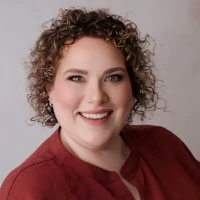
About Amanda Harmon, LCSW, MSW: Amanda Harmon earned her Bachelor of Social Work from Marist University and her Master of Social Work from Fordham University. She began her career working with violent intimate offenders in Poughkeepsie, New York, and later continued her work in Connecticut supporting individuals impacted by intimate partner violence at The Center for Family Justice. Professor Harmon has extensive experience in social work leadership and program development.
At The Greater Bridgeport Area Prevention Program (GBAPP, Inc.), a non-profit community organization in Bridgeport, Connecticut, she worked at Mi Casa/My Home, one of Connecticut’s licensed maternity homes for foster youth, before advancing to Assistant Director of Youth Services. In that role, Professor Harmon developed a Transitional Living Apartment Program in partnership with the Department of Children and Families. She later served as a clinical consultant working in school-based health settings for Family Centers, a nonprofit community organization serving the needs of children and families in Fairfield County.
In addition to her clinical and administrative work, Professor Harmon has maintained a private psychotherapy practice, with a continued focus on serving the LGBTQ+ community. She began teaching as an adjunct at Fordham University in 2011 and joined Sacred Heart University as a full-time faculty member in 2018. At Sacred Heart, she works closely with students in the practicum program and teaches courses such as Clinical Diagnosis and Assessment, Specialized Practice, and practicum seminars.
As Program Director for Sacred Heart University’s (SHU) MSW program, she oversees curriculum development, course revisions, and program planning while ensuring the program aligns with the Council on Social Work Education’s (CSWE) competencies and the NASW Code of Ethics. In addition, Professor Harmon mentors students, collaborates with faculty, and develops innovative learning opportunities for students in the program.
Professor Harmon’s extensive clinical, leadership, and teaching experience informs her approach as Program Director, allowing her to integrate real-world practice with academic training in order to create meaningful, applied learning experiences for students. Her goals include expanding simulation-based learning to build student confidence, creating engaging residency experiences such as an Ethics Escape Room and Advocacy Hackathon, strengthening interprofessional collaboration across different graduate programs at SHU, and deepening partnerships with community organizations to increase and enhance internship opportunities.
Interview Questions
[MasterofSocialWork.com] Would you please provide us with an overview of Sacred Heart University’s Master of Social Work (MSW) program?
[Professor Amanda Harmon] Sacred Heart University’s Master of Social Work (MSW) program is built around preparing thoughtful, confident social workers who are deeply committed to the core values and ethics of the profession. The program uses an Integrated Social Work Practice model, which looks at people through a biopsychosocial-spiritual lens and prepares students to take on issues like racism, violence, and systemic oppression in meaningful ways.
The curriculum is divided into two parts: a generalist year and a specialized year, with a total of twenty courses, including internships and electives. Instead of separating clinical and community social work from the beginning, the program starts by giving students a strong, shared foundation before moving into more focused areas.
In the generalist year, students build their core knowledge and professional identity. They start by learning about integrated practice, ethics, and the skills needed to work with different patient populations. There is also a strong focus on diversity and social change, where students explore how factors like identity, culture, and systemic inequality shape people’s lives. Courses on theory and practice help connect what students learn about human development to real-world interventions.
Students also develop hands-on skills working with individuals, families, groups, and communities while learning things like grant writing and community organizing. Research and policy courses help students understand how to evaluate evidence and think critically about social welfare systems. At the same time, students complete a 500-hour internship over the course of two semesters, where they apply what they are learning in real-world social work settings while starting to develop professional skills.
The specialized year builds on that foundation and moves into more advanced social work practice. There is a strong emphasis on anti-racism and social justice, including a course that looks closely at systems of power and oppression and how to challenge them. Students also learn how to engage in policy advocacy, design and evaluate programs, and take on leadership roles within organizations. On the clinical side, they study DSM-5 diagnoses through an anti-oppressive lens and learn about evidence-based approaches like CBT, DBT, EMDR, TF-CBT, and motivational interviewing.
A second 500-hour internship over the course of two semesters gives students the chance to deepen their skills and demonstrate competency in assessment, intervention, and ethical decision-making. Students can also use electives to focus their studies on areas like school social work or mental health and addiction, or they can explore a broader range of interests.
The program culminates in a Capstone project course, where students focus on a real social justice issue connected to their fieldwork. They research the issue in depth, connect it to their practice experience, and show how their work aligns with social work values, especially around anti-racism and social justice. Overall, anti-racism and social justice are not just topics in courses in the program, they are woven throughout everything. From the first courses to the final capstone, students are consistently encouraged to think critically, challenge systems of oppression, and approach their work with a strong commitment to equity and justice.
[MasterofSocialWork.com] The MSW program is available as an on-campus program for full-time students, a hybrid program for part-time students, and in an online format. Would you elaborate on these different options and the differences between their requirements and structures?
[Professor Amanda Harmon] SHU’S MSW Program has multiple modalities and options for students. We have classes in person on our West Campus in Fairfield, CT, as well as an asynchronous, low residency model online program. The online MSW program is designed to be flexible and primarily asynchronous, meaning students are not required to log in at specific times for live classes. Instead, coursework is completed on each student’s own schedule within a structured weekly format. In asynchronous learning, students engage with recorded lectures, readings, discussion boards, and assignments at times that work best for them, while still meeting deadlines and staying actively involved in the course.
Both online and on ground courses are delivered through a Learning Management System called Blackboard, where students access all materials, submit assignments, and communicate with faculty and peers. The program also incorporates interactive learning tools such as virtual reality experiences and simulations, which allow students to practice real-world scenarios in a more immersive way. Collaboration is an important part of the program, and students regularly engage in group work, discussion boards, and peer-based activities to build connections and deepen their learning.
All online courses are offered in 8-week modules, allowing students to focus on fewer courses at a time while still making steady progress. Beginning in the fall of 2026, students will have the option to enroll on either a part-time or full-time basis, with a minimum completion timeline of 24 months. For those looking to move more quickly, an accelerated option will be available starting in 2027, allowing students to complete the program in as little as 16 months.
Also beginning in 2027, students will have the option to take a blend of online and on-ground courses. Regardless of format, all students will participate in a low-residency model designed to enhance community and hands-on learning. Students are required to attend at least two out of three residency experiences over the course of a year. These residencies are typically one-day sessions lasting six to eight hours and focus on specialized learning opportunities, skill-building, and giving students the chance to connect in person and build a stronger sense of community with their peers.
[MasterofSocialWork.com] The CSWE requires all accredited MSW programs to include field education as part of the MSW curriculum. Sacred Heart University’s MSW program requires students to complete 1,000 hours of field education. Would you discuss this requirement and the importance of fieldwork for MSW students?
[Professor Amanda Harmon] Practicum education is a central part of Sacred Heart University’s MSW program and is the signature pedagogy of Social Work education. Practicum education reflects the CSWE’s emphasis on learning through direct practice, where students are supervised by a social worker on site.
The practicum placement process is highly supported. Rather than expecting students to find placements on their own, the program assigns practicum liaisons who work closely with each student throughout the process. These liaisons meet with students individually to understand their interests, goals, and geographic needs, and then help identify and work to secure appropriate internship opportunities. This is a more hands-on approach compared to some programs that provide a list of sites or expect students to navigate the process independently.
The practicum model is consistent across both campus-based and online students. All students receive the same level of individualized support in securing placements within their communities, ensuring that regardless of format, they are able to engage in meaningful, high-quality field experiences.
All traditional standing students complete a total of 1,000 hours of field education, with 500 hours in the generalist year and 500 hours in the specialized year. Each set of 500 hours is completed over two semesters, allowing students to build skills gradually and meaningfully over time. Advanced Standing students, those who have earned a Bachelor of Social Work (BSW) from a CSWE-accredited program in the last six years, enter directly into the specialized year and complete 500 hours total of fieldwork.
We have placements across the country where students can work at micro, mezzo, and macro levels, across ages and in a multitude of settings including schools, private psychotherapy practices, hospitals, and legislative offices. Some students are able to use their employer, if appropriate, for internships as well. Practicum work is where students really begin to connect what they are learning in the classroom to real-world practice.
Alongside their placements, students participate in a practicum seminar where they reflect on their experiences, process challenges, and intentionally apply concepts from their coursework, such as assessment, intervention, ethics, and anti-oppressive practice, to the work they are doing in their internship placements. This integration helps students build confidence and develop a strong professional identity.
Overall, field education is not just a requirement to graduate, it is a critical part of how students develop the skills, confidence, and professional judgment needed to become effective social workers and gives students the ability to build their professional network while still in school.
[MasterofSocialWork.com] In addition to a track for traditional standing students, Sacred Heart University’s MSW program has an advanced standing track for applicants with a BSW degree from a program accredited by the CSWE. How does this program differ in terms of its curriculum, field education requirements, and its instruction methods?
[Professor Amanda Harmon] In addition to the traditional standing MSW track, which is a 60-credit program, Sacred Heart University offers a 30-credit Advanced Standing option for students who have earned a BSW degree from a CSWE-accredited program in the last six years. Because these students have already completed foundational social work coursework during their undergraduate education, the Advanced Standing track allows them to move directly into the specialized year of the MSW curriculum. As a result, the curriculum is more focused and accelerated.
Advanced Standing students bypass the generalist year and immediately engage in advanced coursework, including clinical practice, policy advocacy, program development and evaluation, and anti-racist and anti-oppressive practice. This allows them to deepen their skills and build on the competencies they have already developed in their BSW programs. As I mentioned, the practicum education requirement is also different. While traditional students complete 1,000 hours of fieldwork across two years, Advanced Standing students complete 500 hours during the specialized year. These hours are still completed over two semesters and are paired with a practicum seminar, where students reflect and connect their experiences to advanced coursework.
In terms of instruction, Advanced Standing students participate in the same learning models as traditional standing students. They also participate in the program’s low-residency model, which provides opportunities for in-person skill-building and community connection. Overall, the Advanced Standing track offers a more streamlined pathway for students who already have a strong foundation in social work, allowing them to complete their degree more efficiently while still engaging in the same rigorous, practice-focused training.
[MasterofSocialWork.com] What role does mentorship play in Sacred Heart University’s MSW program options, and how can students make the most of mentorship opportunities and support systems while they are enrolled in an MSW program?
[Professor Amanda Harmon] Mentorship plays a really important role in Sacred Heart University’s MSW program, both formally and informally. Every student is assigned a dedicated academic advisor, so they have someone consistently available to help them map out their academic path, make decisions about courses, and navigate the program from start to finish. That level of individualized support helps students feel grounded and supported throughout their time in the program.
Beyond advising, faculty are very accessible and invested in student success. They hold regular office hours, but they are also flexible and willing to meet outside of those times if students want additional support or simply want to connect. Faculty bring a wide range of research and practice interests, and they are generous with their time when students want to explore those areas more deeply. In the capstone course, mentorship becomes even more meaningful, as students work closely with faculty while developing and presenting their projects.
There are also a number of opportunities for students to build connections with peers, faculty, and professionals in the field, something that is especially important for online students. Within courses, technology is used to support interactions through discussions, group work, and collaborative assignments. Outside of the classroom, the School of Social Work hosts events like the annual Community Partner Breakfast, where students and their internship supervisors come together to connect with faculty and learn more about community agencies. The program also offers alumni career panels, networking events focused on internship and employment opportunities, and more informal gatherings like Lunch and Learn sessions and community-building events on campus.
Students can make the most of these mentorship opportunities by actively engaging and reaching out to faculty, attending events, participating in discussions, and taking advantage of the support systems that are built into the MSW program. The more students lean into these relationships, the more they are able to grow professionally, expand their networks, and feel connected to the broader social work community.
[MasterofSocialWork.com] Is there advice you would give to prospective students to help optimize their graduate applications for Sacred Heart University’s MSW program?
[Professor Amanda Harmon] Applicants to the MSW program can strengthen their materials by demonstrating a clear, thoughtful, and experience-based commitment to social justice and anti-racism. The most compelling applications move beyond general statements and instead ground these values in real-life examples. Successful candidates often draw from their day-to-day experiences, work, volunteer roles, or internships to show how they have actively engaged in anti-racist practices or advocated for social justice.
Equally important is self-awareness — applicants who reflect on their own biases and learning processes tend to present a deeper, more authentic application. Referencing the NASW Code of Ethics and aligning personal experiences with the program’s mission, guiding principles, and the CSWE framework can further strengthen this narrative.
Competitive applications also tend to highlight direct, hands-on experience. Strong essays and résumés clearly connect past work, volunteer service, or internships to core social work principles. Even for those with less formal experience, the ability to relate other life experiences to social work values is essential. Applicants who demonstrate an understanding of practice across micro, mezzo, and macro levels stand out, especially when they acknowledge that, while clinical work may be a goal, effective social workers must understand broader systems and change processes.
Essays that are well-organized, free of grammatical errors, and fully responsive to the prompts signal professionalism and attention to detail. Letters of recommendation are most impactful when they speak specifically to the applicant’s academic or professional performance and connect those qualities to social work ethics and practice.
For admissions requirements, both traditional and advanced standing applicants must meet baseline academic standards, including a minimum GPA of 3.0. Advanced Standing applicants, who must hold a BSW degree, are expected to demonstrate a higher level of preparedness. This includes earning a grade of B or better in all undergraduate social work courses and showing a more developed understanding of social work theory, evidence-based practice, and anti-racist frameworks. Strong advanced standing candidates clearly articulate what they have gained from their undergraduate education and practicum experiences, making explicit connections to CSWE competencies, DEIJ [Diversity, Equity, Inclusion, and Justice] principles, human rights, and applied practice skills.
Overall, the most successful applicants present a cohesive narrative that integrates academic achievement, practical experience, and a genuine commitment to the values of the social work profession.
[MasterofSocialWork.com] What makes Sacred Heart University’s Master of Social Work program an exciting choice for prospective graduate students?
[Professor Amanda Harmon] What makes Sacred Heart University’s MSW program an especially exciting choice for prospective students is how intentionally it blends flexibility, strong academic preparation, and a deep commitment to social justice with real, meaningful support for students throughout their journey, including opportunities to practice skills through simulations, residencies, and field experiences.
One of the most distinctive aspects of the MSW program is its Integrated Social Work Practice model. Rather than separating clinical and community practice, students are trained to think holistically by working across systems and understanding individuals within their broader social, cultural, and structural contexts. That approach, combined with a strong emphasis on anti-racism and anti-oppressive social work practice, prepares students not just to work in the field, but to actively challenge inequities and create change.
The structure of the program is also a major benefit. For the online program, the asynchronous format, with courses delivered in 8-week modules, gives students the flexibility to balance school with work and personal responsibilities, while still staying engaged and progressing steadily through the program. While the on-ground program allows students to come to campus once a week and work with their peers and faculty in person. Through interactive coursework, group projects, simulations, and in-person residencies, students are able to build real relationships with their peers and faculty.
Another standout feature of the program is the level of individualized support students receive. From dedicated academic advisors to highly engaged faculty and practicum liaisons, students are guided at every stage from course planning to securing practicum placements to completing their capstone projects. This level of mentorship is not just built into formal roles, but also reflected in the culture of the program, where faculty are accessible and invested in student success.
The program also fosters strong peer-to-peer connection and collegial support. Students collaborate regularly in their courses and often form meaningful relationships that extend beyond the classroom. Opportunities like residencies, networking events, and community gatherings further strengthen those connections. In addition, events such as the Community Partner Breakfast, alumni panels, and career networking opportunities help students build relationships not only with peers, but also with professionals and graduates of the program. This contributes to a growing and engaged alumni network that students can tap into as they move into their careers.
Overall, what sets Sacred Heart apart is the combination of rigor, flexibility, and genuine community. Students are not only gaining the skills and knowledge needed to be effective social workers; they are joining a program that supports them, challenges them, and connects them to a broader professional network committed to advancing social justice.
Thank you, Professor Amanda Harmon, for your excellent insight into Sacred Heart University’s in-person, hybrid, and online Master of Social Work programs!